
Matata · Crisis Response
Crisis damage reports from the community, on an analyst's screen in real time
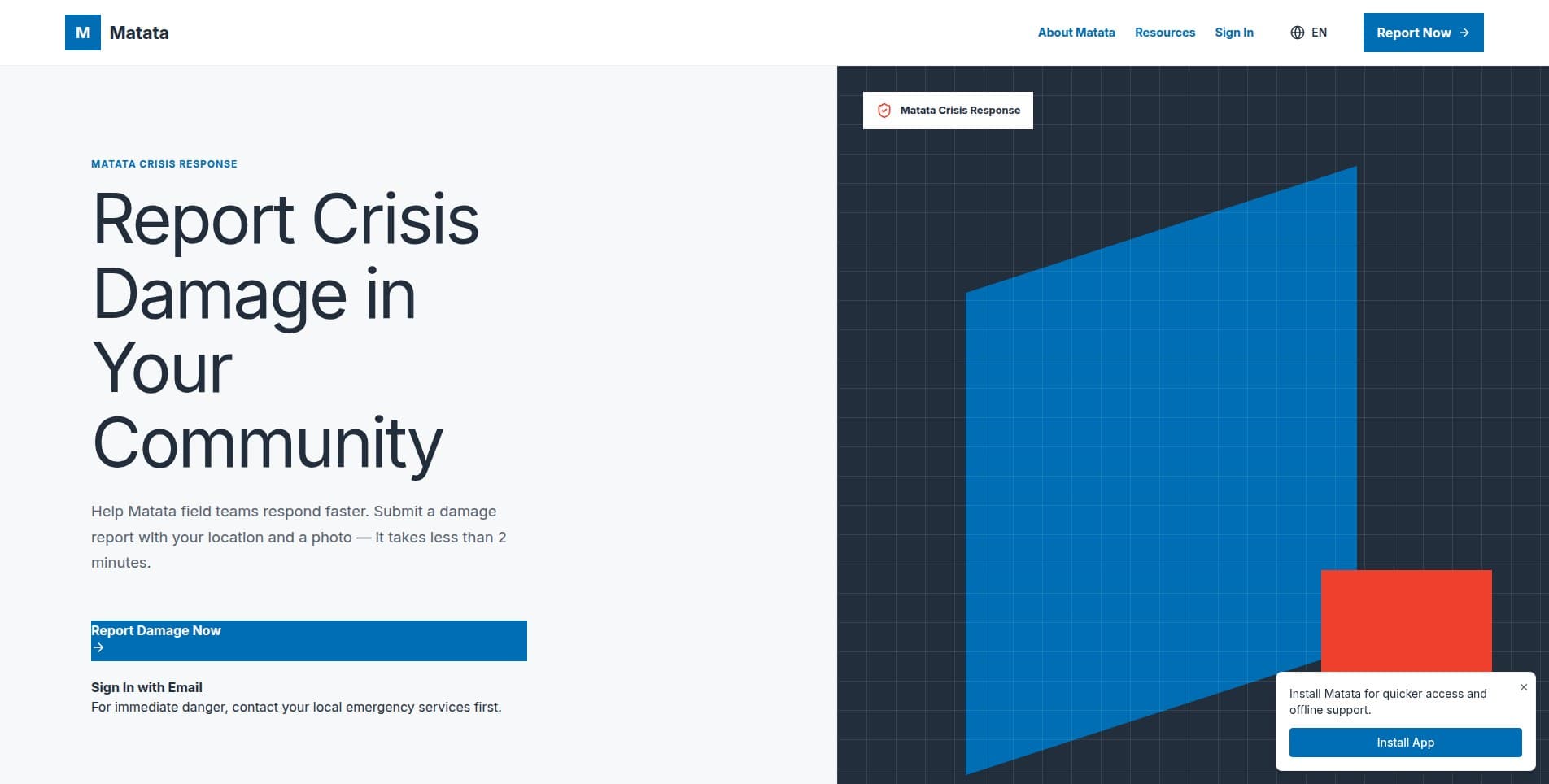
A Progressive Web App that lets community members report damaged infrastructure after floods, earthquakes, wildfires or conflict, feeding a live analyst dashboard for UNDP Regional Responders.
Built for
UNDP Regional Responders
Type
Progressive Web App
Languages
10, including Arabic
The first hours after a crisis are the hardest to see clearly
When a flood, earthquake, wildfire or conflict hits, responders need to know which buildings, roads and utilities are damaged and where. The people who know first are the ones living there, and they are often on a weak or broken mobile connection.
Matata was built so that anyone in an affected community can report damage immediately, with a location and a photo, and so that those reports reach analysts as usable data rather than scattered messages.
A reporting app for the community and a dashboard for responders
Matata is a mobile-first Progressive Web App. It opens in a browser, installs to the home screen and needs no app store. A report takes less than two minutes.
01
Locate the damage
The reporter shares their GPS location or describes a nearby landmark.
02
Describe the crisis
They select the crisis type, the infrastructure affected and the level of damage: minimal, partial or destroyed.
03
Submit the report
A photo can be added. The report reaches field analysts as soon as it is sent.
Built for bad connections and stressful moments
- Works offline: reports are queued on the device and sync automatically when the connection returns
- Report anonymously or sign in with an email code to keep a history of submissions
- Covers floods, earthquakes, wildfires, conflict and other crises
- Available in 10 languages, including right-to-left Arabic
- A clear reminder to contact local emergency services first when there is immediate danger
A live picture of what is being reported
Live report stream
New reports and updates appear on the dashboard as they arrive, without refreshing.
Damage heatmap
Geolocated reports are plotted on an interactive map so clusters of damage are visible at a glance.
Duplicate review
Reports of the same damage are detected and presented for an analyst to review and merge.
AI-assisted assessment
Each report carries an AI damage prediction, and analysts can review how accurate those predictions have been.
Data export
Report data can be exported for use in other response and planning tools.
Role-based access
Analyst, responder and admin roles control who can see and do what.
Live and open source
Matata is live at matatacrisis.xyz and is built and maintained by Origin. The code is open source under the Apache 2.0 licence, so responders and partners can inspect it, adapt it and run it themselves.
Under the hood
See it for yourself
Working on something where the technology has to be dependable and the stakes are real? We would like to hear about it.